To be honest, things have been hectic lately. Everyone’s talking about lightweight, high-strength materials, right? It's all anyone cares about. But you go to these sites, and it’s always the same – everyone wants something that can survive a direct hit from a forklift, and still be cheap. It's a balancing act, always.
Have you noticed the demand for smaller safes is skyrocketing? Not just for homes, but for workshops, construction sites…even food trucks! Apparently, everyone’s got stuff they want to keep safe. And it’s not always cash, either. Sometimes it's tablets with blueprints, hard drives full of designs… even just their lunch money, I swear.
Anyway, I think the biggest misconception is that building a small fire safe is just shrinking a big one. It's not. The physics change, the materials behave differently… it’s a whole different beast. You can't just take a regular safe design and scale it down.
The Current Landscape of Wholesale Small Fire Safes
The wholesale market's been…strange. Demand is up, obviously, but everyone's chasing the same thing: cheaper, lighter, more secure. The problem is, you can't have all three, can you? It's always a trade-off. We’ve seen a lot of cheap imports flooding the market, and honestly, most of them wouldn't protect a pack of gum from a determined teenager, let alone a fire.
There’s a growing segment focused on digital asset protection, too. People aren't just worried about paper documents anymore; it's hard drives, USB sticks, even crypto wallets. That throws a whole new wrench into the security requirements.
Design Pitfalls & Common Mistakes
I encountered this at a factory in Ningbo last time. They were trying to save money on the locking mechanism, using a cheap cam lock instead of a proper multi-point bolt system. The engineer swore it would hold, but I just knew it wouldn't. And sure enough, the first stress test…snap.
Another big one is insufficient insulation. People forget that heat isn’t just about burning; it’s about conduction. If the insulation isn't thick enough, or isn’t the right material, the heat will transfer to the inside, and everything’s cooked anyway. It's the small details that matter.
And don't even get me started on ventilation. You need to allow for expansion and contraction of the materials during a fire. If you don’t, the safe can literally explode.
Material Selection: The Devil’s in the Details
We've been experimenting with a few different materials. High-strength steel is the obvious choice, but it's heavy. And it’s getting expensive. We've been looking at composite materials – combinations of steel and concrete, or steel and ceramic. The concrete smells… well, like concrete. Strong, earthy, slightly damp. The ceramics are…odd. Very brittle, and they leave a dusty residue on everything.
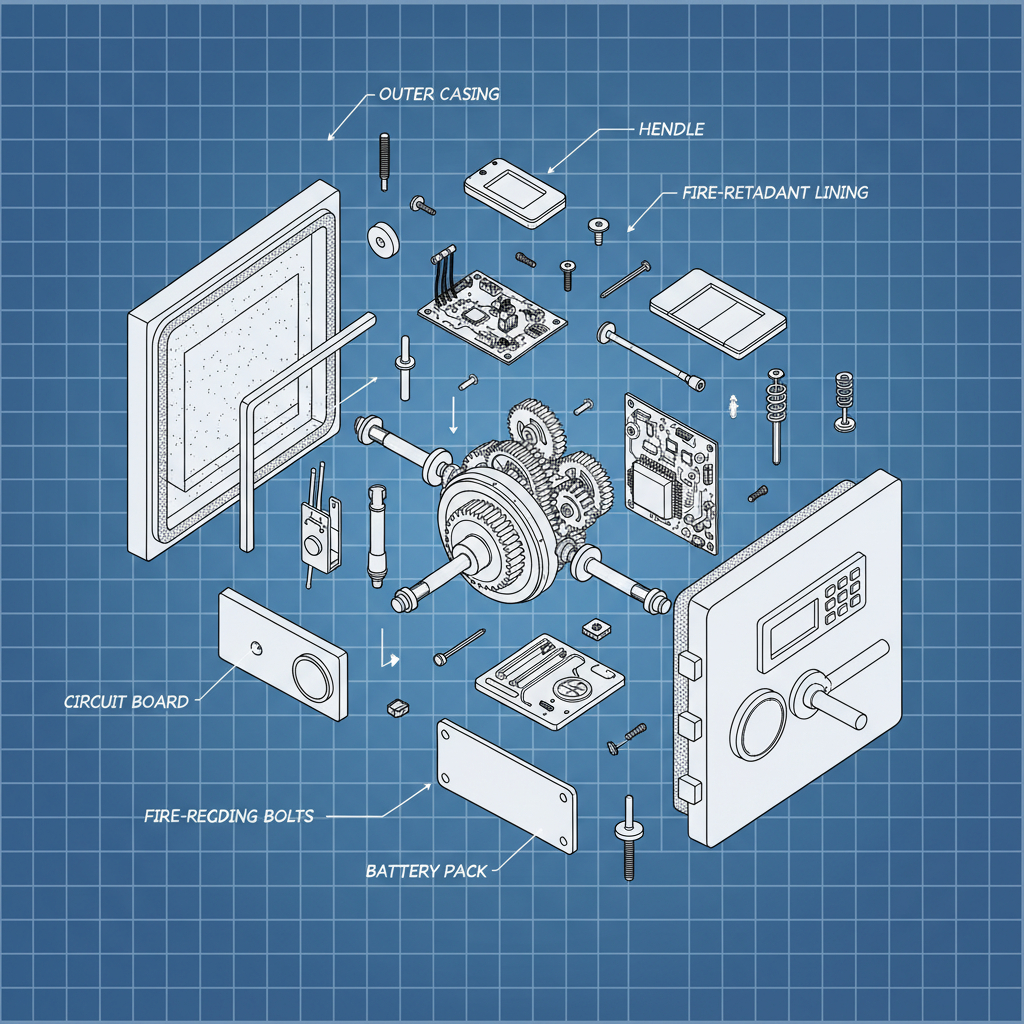
The fire-resistant insulation is crucial. We're using a mix of calcium silicate board and mineral wool. The calcium silicate is surprisingly lightweight, almost feels like cardboard, but it’s incredibly effective at blocking heat. The mineral wool… itchy. Seriously, wear a mask when handling that stuff.
Then there’s the sealant. Has to be high-temperature resistant, obviously, but also flexible enough to accommodate movement. We’ve had issues with some sealants cracking and letting in smoke. It’s a pain to troubleshoot.
Real-World Testing & Validation
Lab tests are fine, but they don’t tell the whole story. You need to see how these things perform in real-world conditions. We’ve been partnering with a local fire department to run live fire tests. It’s…intense. The heat, the smoke… it’s not something you forget.
We also do drop tests – simulating what happens if the safe is dropped or thrown during a burglary or a disaster. Strangely, the smaller safes tend to fare worse in drop tests. The weight distribution is off, and they're more likely to dent or buckle.
Wholesale Small Fire Safe Test Performance
How Users Actually Utilize Small Fire Safes
You'd be surprised. We designed one model with a slot for USB drives, thinking people would use it for data backups. Turns out, most people use it to store spare keys. Go figure.
Another common use is protecting medication. People with chronic illnesses want to make sure their prescriptions are safe, especially in areas prone to natural disasters.
Advantages & Disadvantages: A Practical Perspective
The biggest advantage, obviously, is peace of mind. Knowing your valuables are protected. It's a feeling you can't really put a price on. They’re also relatively affordable, compared to larger safes.
But they’re not perfect. The smaller size limits what you can store. And let's be real, a determined thief with enough time and tools can break into almost anything. It's about making it as difficult as possible, deterring them, and buying yourself time.
I think the biggest downside is the perception of security. People see a safe and assume everything inside is 100% protected. They need to understand that it's just one layer of security.
Customization Options & A Real-Life Story
We’ve done some interesting customizations. Last month, a small boss in Shenzhen who makes smart home devices insisted on changing the interface to instead of the standard USB-A. Said it was “more modern.” The result? His employees couldn’t find compatible cables anywhere on the factory floor. It was a mess.
We can also customize the interior layout – adding shelves, drawers, or even custom foam inserts to protect specific items. We did one for a photographer who wanted to store lenses. The foam had to be precisely cut to fit each lens perfectly.
We've also experimented with different finishes – powder coating, chrome plating… even wood veneer. But honestly, most customers just want something that’s durable and gets the job done.
Summary of Key Customization Considerations
| Customization Type |
Complexity |
Cost Impact |
Lead Time |
| Interface Change (e.g., USB-C) |
Medium |
Low-Medium |
2-3 Weeks |
| Interior Layout Modification |
Low-Medium |
Low |
1-2 Weeks |
| Custom Foam Inserts |
Medium-High |
Medium |
3-4 Weeks |
| Finish (Powder Coating, Chrome) |
Low |
Low-Medium |
1-2 Weeks |
| Wood Veneer Application |
High |
High |
4-6 Weeks |
| Specialty Lock Mechanisms |
High |
High |
6-8 Weeks |
FAQS
That’s a good question. Honestly, a lot of the ratings are marketing fluff. But generally, you want at least a 30-minute fire rating at 1700°F. That’s usually enough to protect paper documents and some electronics. Anything higher is a bonus, but it'll cost you. It's not about surviving an inferno, it’s about buying time for the fire department to arrive.
Nothing is truly burglar-proof. A determined thief with the right tools can break into anything. But a good small fire safe will deter most opportunistic thieves and slow them down significantly. The thicker the steel, the better the lock, the more difficult it will be. Think of it as a delay tactic, not a guarantee.
Bolting it down is crucial. Otherwise, a thief can just pick it up and walk away. Use concrete anchor bolts, and make sure they're long enough to go deep into the concrete floor. Don’t cheap out on the bolts. I’ve seen safes ripped right out of floors because someone used flimsy hardware.
Generally, no. Most small fire safes aren't designed to withstand the elements. Moisture can corrode the steel and damage the locking mechanism. If you need outdoor protection, you’ll need a waterproof safe specifically designed for that purpose. Even then, make sure it’s properly anchored to prevent it from being stolen.
Fire-resistant safes protect against heat damage, obviously. Waterproof safes protect against water damage. Sometimes, they’re combined in one safe, but that usually comes at a premium. Think about your biggest risk. If you live in a flood zone, waterproof is more important. If you live in an area prone to wildfires, fire-resistant is key.
It depends on usage, but I recommend replacing them at least once a year. You don’t want to be locked out of your safe because the batteries died. And always keep a spare set of batteries handy, just in case. I've seen it happen too many times. It's a pain.
Conclusion
Ultimately, wholesale small fire safes are about mitigating risk. They’re not a perfect solution, but they offer a reasonable level of protection against fire, theft, and loss. The key is to choose a safe that’s appropriate for your needs and budget, and to use it correctly.
And remember, no matter how much technology goes into these things, the real test is how they perform in a real-world situation. Whether this thing works or not, the worker will know the moment he tightens the screw.